Biomass Loading
Solid and liquid biomasses are loaded through a pre-tank or loader into digesters made of concrete or steel.
Continuous-Flow Stirred Tank Reactor — the backbone of efficient biogas production. Engineering clean energy through advanced anaerobic digestion systems.
Ever wondered what makes CSTR (Continuous-Flow Stirred Tank Reactor) technology a key player in biogas production? CSTRs ensure perfect homogenization of biomass with continuous mixing.
Ideal for dry matter contents below 10%, they operate at controlled temperatures, providing flexible and efficient biogas production. This makes them suitable for diverse biomass types, contributing significantly to renewable energy generation.
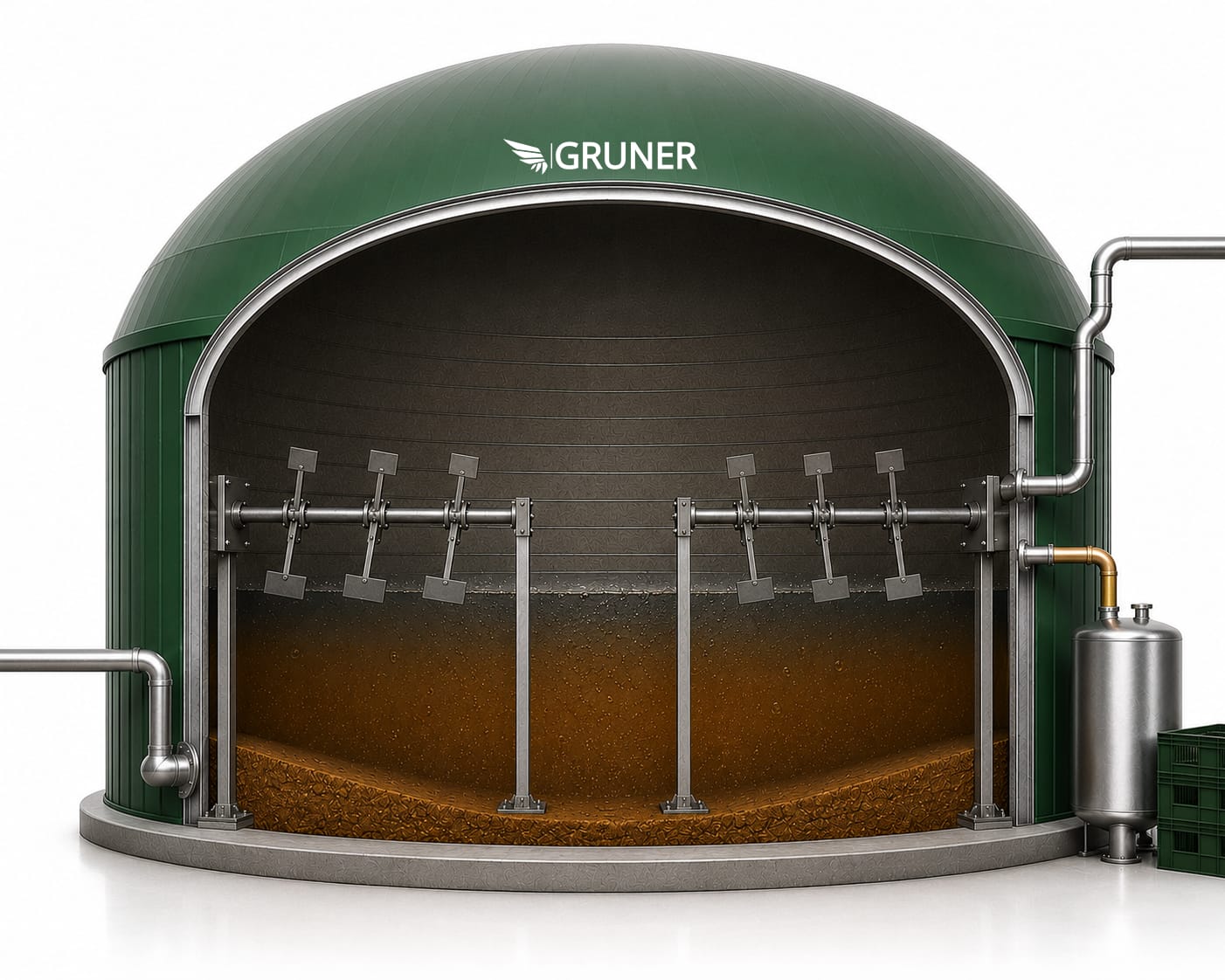
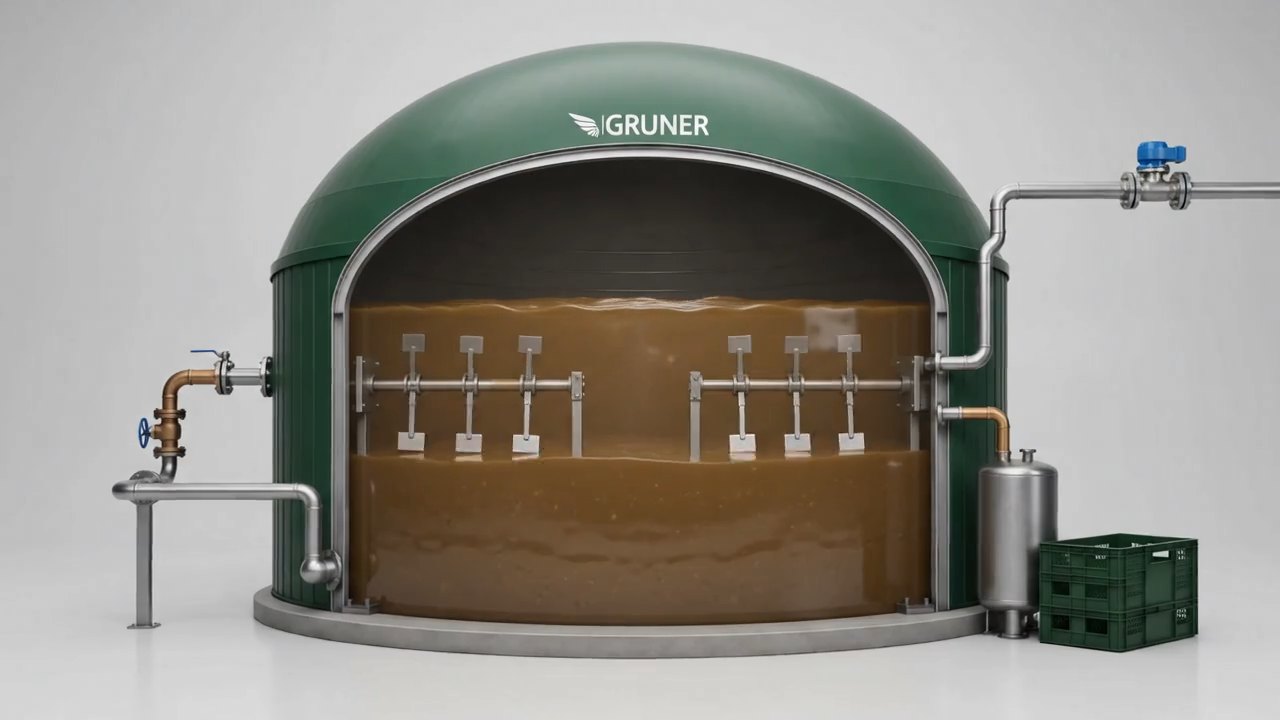
Solid and liquid biomasses are loaded through a pre-tank or loader into digesters made of concrete or steel.
Mechanical slow and fast mixers keep the substrate fully homogenised while anaerobic digestion runs under a controlled mesophilic or thermophilic regime.
Microbial breakdown of the organic load releases biogas continuously across a retention time of 20 to 45 days.
The biogas collects in the digester headspace under a double-roof membrane, buffering output before treatment and upgrading.
Suitable for feeding the plant with biomass with a complex digestion process.
Provides the possibility to implement co-digestion with a varied recipe of biomass inputs.
High buffering capacity for pH variation, ensuring stable and consistent operations.
How do CSTRs contribute to environmental sustainability? Continuous active mixing in CSTRs ensures perfect biological stability and maximum biogas extraction. This highly efficient, uninterrupted process serves as the operational backbone of our commercial energy facilities.
By transforming diverse organic waste into renewable power, this technology captures harmful greenhouse gases before they escape. It actively displaces fossil fuel usage, driving our transition toward a zero-carbon environment.